Mead / Time

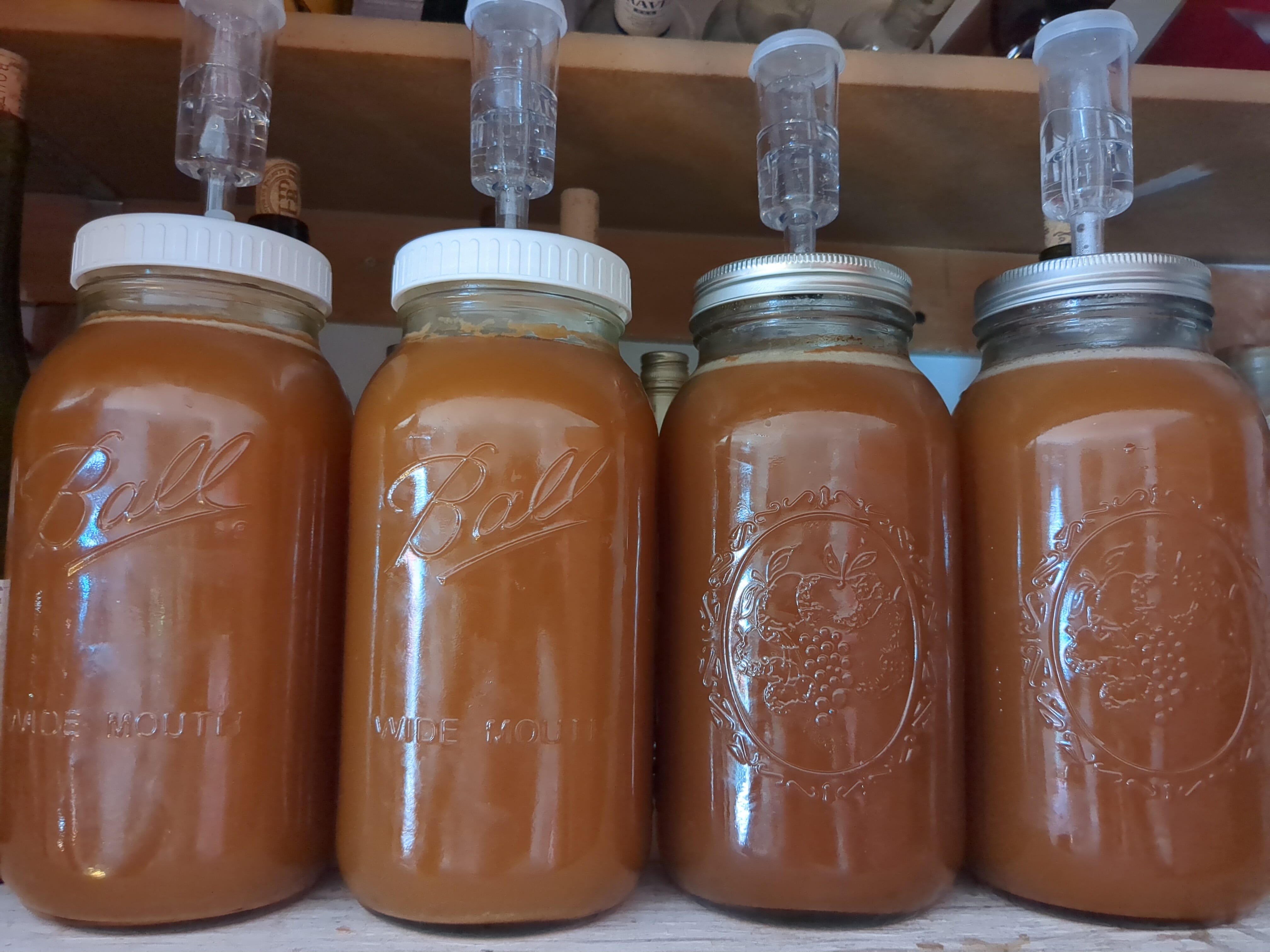
Mead is fermented honey. I dislike the term “honey wine.” No Celtic woman ever called it “wine”. It is not wine, it is mead. A little etymological work shows medb — “intoxicating”; and hence the connection to the legendary Celtic Queen Maeve (Meadhbh, Méabh) indicating “she who intoxicates.”
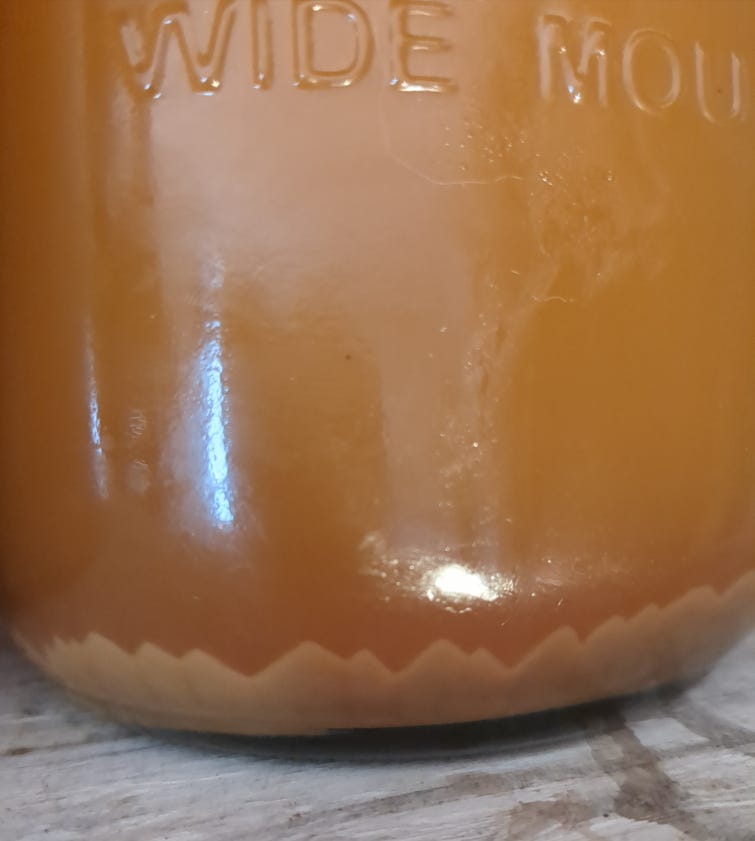
I have pictured here four half-gallon Mason jars of local honey on their way to becoming mead. I am using Mangrove Jack’s M05 yeast, and Fermaid-O yeast nutrients because, as awesome as honey is, it does not contain a balanced diet for Yeast, especially in the Nitrogen deoartment.
The next morning, watching the air locks bubble bubble, I am trying to imagine how many yeasts are in the jars, and how many more are to come. My thoughts go to Time.
Time is a funny thing. I am pondering the rate of flow of Time. Is the yeast unfolding through Time at the same rate as I am?
A mouse looks to you and me like it is racing around and breathing way too fast. But the mouse does not experience itself that way. It’s just moving around and breathing. The mouse lives for 2 or 3 years, I live for 80 years. That’s a factor of 40. Does a mouse live as much of a life as me, just 40 times faster? During the first World War, from studies of speeds of wound healing of different aged soldiers, Pierre Lecompte Nouy collected data that showed that younger people healed quicker from their wounds than did older people. Duh, I think we all knew that. But Nouy quantified that difference and showed that it was logarithmic. Biological time unfolds logarithmically, not linearly. If I am twice your age that does not mean my wounds will heal half as fast as yours, but the time of wound healing increases with the logarithm of the person’s age.
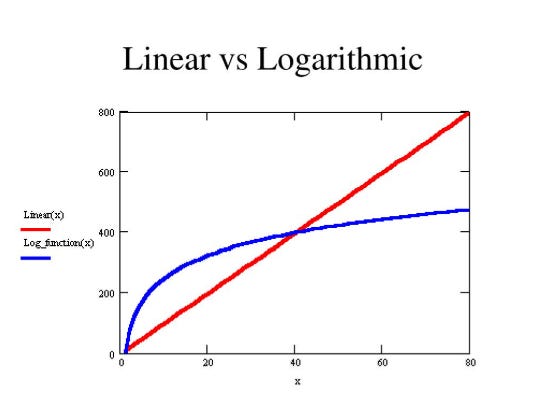
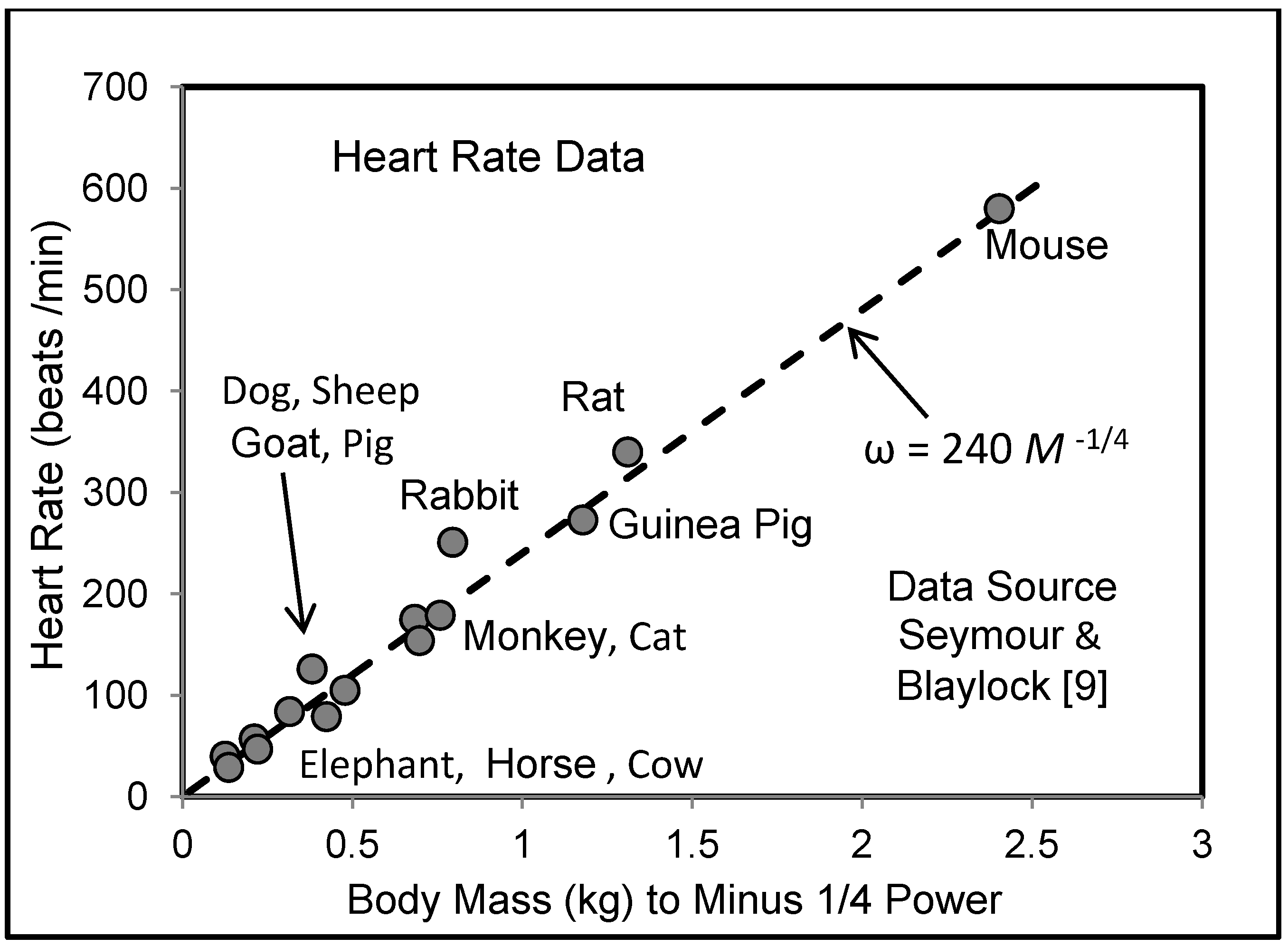
Nouy proposed that there is a thing called Biological Time. This has been further developed by authors such as F. Roles, H. Wright, R. Collins to systematize the fact that different living creatures live at different rates. We can, and should have two categories of time: physics time and biological time. By Physics Time I mean how we can make clocks that are tied to the motion of the Earth around the Sun. Biological Time is the living creature’s experience of time. Since my inner experience is the only thing that is truly, directly real to me, it makes sense to have a version of Time that is tied to my inner experience.
An animal’s sense of time is tied to its metabolism. The mouse metabolism is faster than mine, which allows the mouse to experience everything more quickly than me. A memory just popped up of me as a 10 year old boy, inside a grain silo that was filled with wheat, trying to catch a mouse. I recall the shock of how quickly the little guy moved. I was able to catch it by the tail. I yelled out to the adults, “I caught it”. Then it bit me on the finger and I let it go. Where was that? What the heck was I doing inside a grain silo filled with wheat? End of memory. Back to metabolism being tied to my personal perception of time, there is a conceptual leap to take here, which is that all creatures have equally full lives. A mouse does not have 1/40th the life experiences that a human has. The mouse has just as many meals and poops as me; just as many breaths, as many smells and laughs and fights and health problems and family dynamics. At the end of 2 years, and at the end of 80 years, both mouse and man have had the rich full life allotted to them.
Keeping this conceptual leap, getting back to mead, what then of yeast, which spawn a new generation every hour or two of our time? What can we say about the speed at which yeast are living? If people give rise to a new generation every 20 or 30 years, and yeast give rise to a new generation every hour or two, then yeast are living 125,000 times faster than us. The bulk of the fermentation process for mead takes about a week my time, which translates to about 2000 years in yeast time. I pause to let that settle in. Is it an accident that 2000 years of human time is what we call an Age? Our Sun travels through the Zodiac, spending about 2000 years in each sign. The ancients considered that a major cycle of human civilization was tied to this 2000 year pulse. Is it really an accident then that a full cycle of yeast fermentation lasts 2000 years in “yeast time”?
I do not know what the inner life of yeast is like. Like all living creatures on Earth, they have a youth, grow old and die, they have immediate family. They can feast on honey for generations then die of starvation and the poison of their own waste. In that sense, we have a tremendous amount in common.
Now my imagination is really running. 2000 yeast years, huh? I think of the past 2000 years of human Western Civilization with all its millions of human-cells. I’m not saying the yeast have governments and create art, but I bet there is a whole lot we do not know about what goes on through so many generations of yeast. I note that the value for me is not really the lives the yeasts have lived. What matters to me is the refined final product, called mead, which will need to sit and mellow for several months of my time, which is 40,000 yeast years. I wonder, are all the results of European civilization being captured in some much larger celestial brewery, to be enjoyed only after mellowing for 40,000 human years?
A good Pilsner beer takes 4 to 8 weeks from start to finish. Not bad for something so good.
Awesome Michael. I just started brewing again, after a few decade hiatus lol
Ultra ABV Ginger beer blended down with Peach nectar and honey has been my favorite (bottle carb like champagne) in swingtops. Lots of ciders too with fruit added in secondary/conditioning phase.